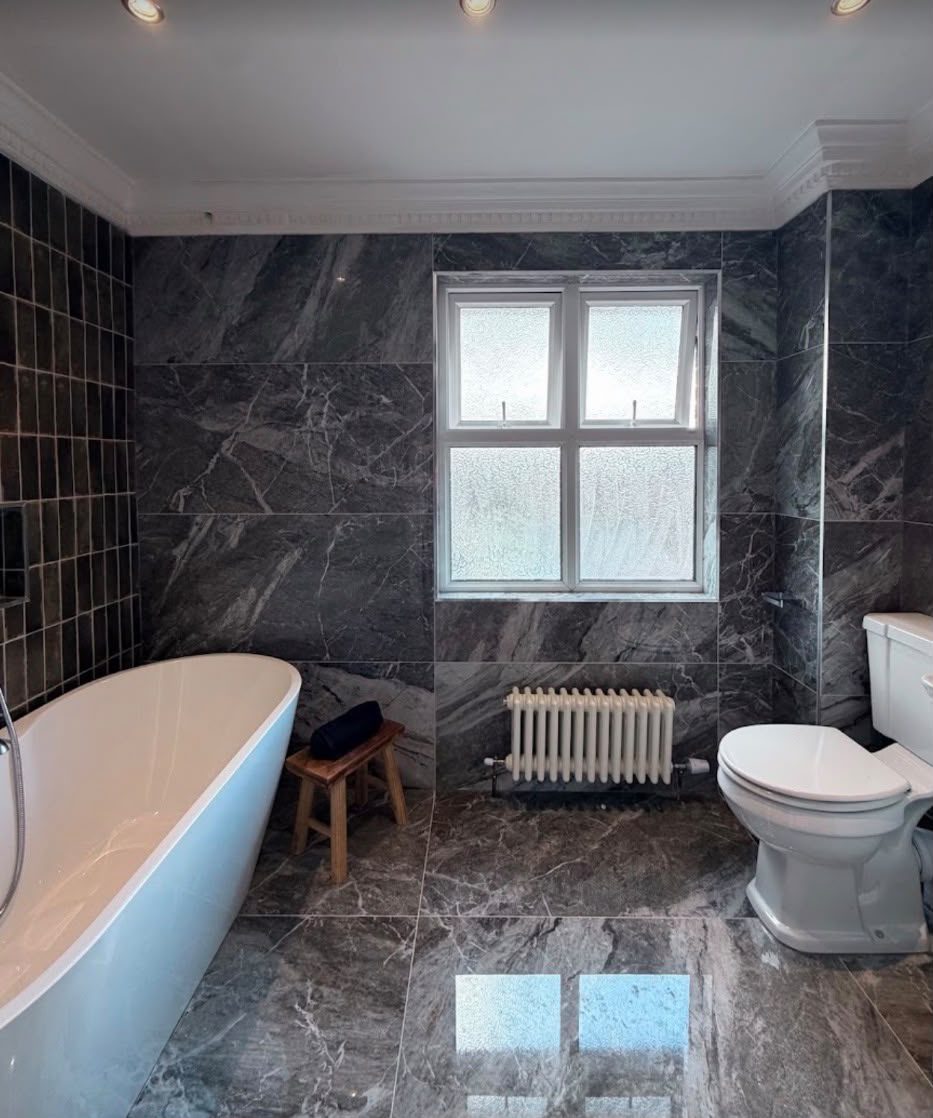
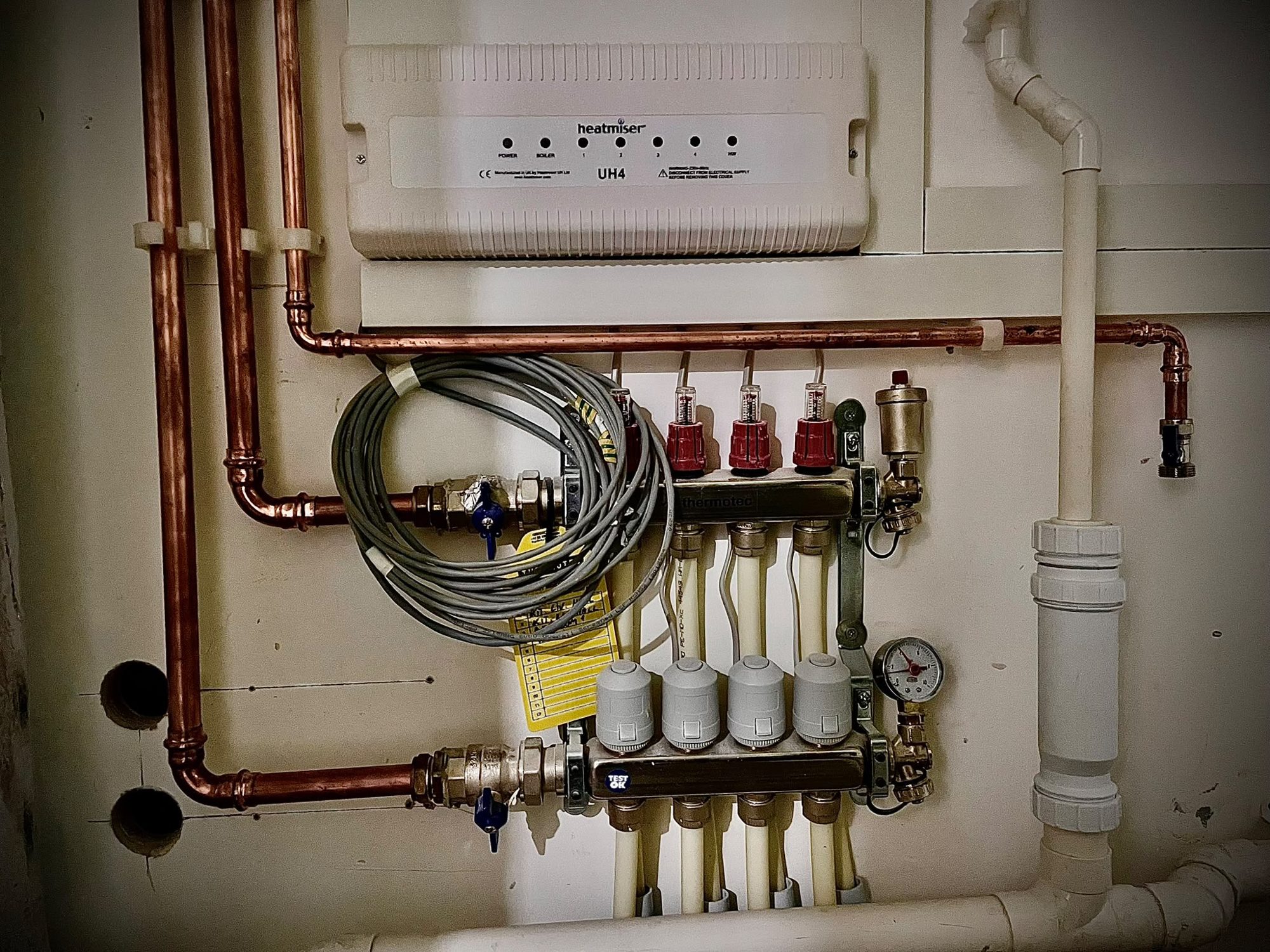
Plan a complete bathroom renovation around layout, plumbing, waterproofing, tiling and finishing, with the hidden preparation considered alongside the look of your new room.
Discuss your job with James · Free planned quotations
9–10 years’ experiencePublic liability insuredSpeak directly with James24-hour call-outs, subject to availability
The service
A renovation is more than a new suite
A complete bathroom renovation gives you the opportunity to reconsider how the whole room works. The layout, water supplies, waste routes, wet areas and surfaces all influence the result. Choosing attractive tiles and fittings is important, but the work behind them needs equal attention if the room is to suit everyday household use.
JPH Plumbing & Bathrooms provides residential bathroom renovations in Ballyclare, Newtownabbey and surrounding service areas. The service includes removal of the old bathroom, plumbing, tiling, waterproofing and finishing. Qualified electricians are coordinated where electrical work is needed. The exact project scope, products and responsibilities should be discussed for your home before work is agreed.
James Higgins brings 9–10 years of experience and holds public liability insurance. Planned renovation quotations are free. Where the initial enquiry involves investigating an existing fault, diagnostic work is chargeable. Explain known leaks, damp or previous damage early so a cosmetic brief is not mistaken for a complete description of the room’s condition.
When something needs attention
When the whole room needs a fresh approach
A bathroom may need renovation because the arrangement no longer suits the household, finishes are deteriorating or several fixtures need attention together. Repeated patch repairs can also prompt a broader review. The aim is not simply to replace everything automatically, but to understand which parts of the room can reasonably remain and which need rethinking.
Dark grout, cracked finishes or loose tiles do not, on their own, reveal the full condition behind the surface. Likewise, a room can look dated while its layout remains perfectly useful. Describe both your practical problems and your preferred appearance so decisions about hidden work are not driven only by the visible finish.
Space is often the real constraint. A larger shower, additional storage and a freestanding bath may each appeal individually but compete for the same floor area. Prioritising daily routines, cleaning access and comfortable movement helps build a brief that can be assessed against the room rather than a collection of unrelated product choices.
A clear next step
A proposed renovation planning sequence
01
Build the brief around daily use
Explain who uses the bathroom, what frustrates you and which features matter most. Share the existing layout, accessible photographs and your location. Mention whether this is the only bathroom, whether you want a bath retained and any mobility or access needs that should inform the discussion from the beginning.
02
Assess the room and proposed changes
An assessment could consider existing supplies, waste routes, accessible surfaces and the feasibility of the preferred layout. Some conditions may remain unknown until removal. The proposal should distinguish visible findings from assumptions and identify where concealed damage or previous alterations might change the work once access becomes possible.
03
Agree the scope and connected trades
Discuss removal, plumbing, waterproofing, tiling, fixtures and finishing as connected parts of the project. Qualified electricians are coordinated where electrical work is required. Clarify product supply, waste removal arrangements, exclusions and how changes would be approved. These details should be agreed rather than inferred from a general description of a complete renovation.
04
Plan the sequence and final review
Discuss deliveries, room access, service interruptions and suitable arrangements while the bathroom is unavailable. The proposed sequence needs to account for preparation and product requirements, not just visible fitting. A final review could cover operation, care guidance and any agreed outstanding items; the actual handover arrangements should form part of the project discussion.
What matters in your home
What a joined-up renovation plan can offer
A layout with a clear purpose
Planning the whole room lets you consider storage, clearances and bathing needs together. It may reveal that retaining a fixture position is sensible or that one carefully chosen change matters more than moving everything. The most useful layout is one that works for the household within the room’s constraints.
Attention to preparation as well as finish
Waterproofing, suitable surfaces and access arrangements can be overlooked when choices focus on tile colour alone. Bringing these topics into the scope helps make the quotation meaningful. It also avoids treating attractive finishes as proof that the underlying room has been assessed or appropriately prepared.
Clearer decisions when discoveries arise
Older bathrooms can conceal previous repairs or deteriorated materials. Discussing how findings and variations will be handled creates a more useful basis for decisions if the original scope needs adjustment. It is not a promise that hidden issues can be predicted or that a quoted plan will never change.
The practical details
The decisions that shape a complete renovation
Layout, clearance and future practicality
Start with how the room is used in the busiest part of the day. Consider where someone stands at the basin, how the shower opens and whether storage blocks access to another fixture. A plan should allow for movement and cleaning, not simply fit each product inside the room’s outline.
Moving fixtures can involve altered water and waste routes, with consequences for floors and walls. Ask what a layout change entails before choosing it for appearance alone. If you are planning for changing mobility needs, describe the practical requirements clearly; suitability needs assessment rather than an assumption that a particular style is automatically accessible.
Waterproofing and the surfaces behind the tiles
Tiles and grout should not be treated as the complete waterproofing strategy for a wet area. The substrate, junctions and proposed waterproofing approach deserve specific discussion. Ask which areas are included and how the selected materials relate to the shower or bath arrangement being installed.
Removing the old bathroom may reveal surfaces unsuitable for direct finishing. Any necessary preparation should be understood before new tiles are applied. The appropriate materials and sequence depend on the room and product requirements; the service description is not a technical specification or a guarantee that every existing surface can be retained.
Tiles, fittings and coordinated choices
Tile size, pattern and finishing details affect both appearance and the practical work involved. Small rooms can be particularly sensitive to awkward cuts around windows, niches and fixtures. Discuss the proposed layout, edges and transitions alongside the tile choice so those details do not become last-minute assumptions.
Fittings also need to work with the available supplies, waste arrangements and room dimensions. Share product specifications before ordering where possible. Concealed valves and cisterns require particular thought about future access. A coordinated selection considers maintenance as well as the clean appearance of a newly finished room.
Electrical work, ventilation and household disruption
Bathroom lighting, fans and other electrical elements require suitable specialist involvement. JPH coordinates qualified electricians where electrical work is needed. Explain your preferences early so the plumbing and finishing plan can take them into account; do not assume a desired fitting or position is suitable without assessment.
During a complete renovation, the bathroom may be unavailable for part of the work. Discuss how the household will manage, where materials can be stored and which access routes need protecting or keeping clear. Product delivery and preparation requirements can affect sequencing, so avoid arranging other commitments around an unconfirmed completion date.
A few useful answers
Before you get in touch.
Questions about bathroom renovations for your home. Discuss any job-specific requirements with James.
What does a bathroom renovation cost?
Cost depends on room condition, layout changes, products, preparation and the agreed finishing scope. Planned renovation quotes are free; fault-finding visits are chargeable. Ask which materials, removal arrangements and connected trades are included and how hidden issues would be priced if found. No fixed package price is stated. Payment is accepted by cash or bank transfer.
How long will the renovation take?
No completion-time promise is confirmed. Removal, repairs, plumbing, waterproofing, tiling and finishing need an appropriate sequence, and concealed conditions or deliveries may affect the plan. Discuss expected stages after assessment and tell James if you have only one bathroom. Avoid booking around a fixed finish date until practical arrangements have been discussed for the actual project.
What does the renovation process include?
JPH’s renovation service includes removal, plumbing, tiling, waterproofing and finishing, with qualified electricians coordinated where needed. The exact extent of each element should appear in your agreed scope. Ask about product supply, access, disposal arrangements and any separate decorating or other work. A complete-service description does not replace a project-specific list of inclusions and exclusions.
Do you provide a renovation guarantee?
No specific workmanship guarantee or period has been confirmed. Ask James for any applicable written terms before agreeing to the work. Product warranties are separate and may carry their own care or installation conditions. JPH holds public liability insurance. Clarifying these matters beforehand is more useful than assuming a general guarantee covers every material, fitting and future issue.
How long should a renovated bathroom last?
There is no single lifespan for an entire bathroom. Working components, sealants and decorative finishes age differently, and ventilation, cleaning and household use influence their condition. Ask for relevant product care information and consider access for future maintenance. A complete renovation does not remove the need to monitor leaks or address wear when it becomes apparent.
Can you help with an urgent leak before renovating?
JPH offers chargeable 24-hour emergency plumbing call-outs, subject to location and availability, with no guaranteed arrival time. Call 07548 665013 for an urgent leak rather than waiting for a renovation enquiry to be answered. An emergency visit is distinct from a free planned quotation and may focus on the immediate problem rather than the future renovation.
Where do you carry out bathroom renovations?
The service is residential and covers Ballyclare, Newtownabbey and surrounding areas, including Belfast, Glengormley, Carrickfergus, Larne and Templepatrick. Provide your postcode when enquiring to check location and availability. Describe access restrictions, the property type and whether the bathroom is upstairs, as these practical details help frame the initial discussion.
What should I prepare for the first discussion?
Gather a short list of priorities, approximate room dimensions, accessible photographs and any product ideas. Note existing leaks, loose surfaces and previous alterations. Explain your budget priorities without assuming every preferred feature will fit. Do not strip the room or remove tiles to prepare; concealed conditions and safe removal should be dealt with through the agreed assessment and work arrangements.
Let’s get it sorted
Turn your ideas into a practical renovation brief
Contact James on 07548 665013 to discuss a residential bathroom renovation in Ballyclare, Newtownabbey or a surrounding service area. Share what needs to change, what you would like to keep and any known problems. A free planned quotation can then be discussed with the scope, practical arrangements and unresolved questions made clear.
Public liability insured. Free quotations for planned work; emergency and fault-finding visits are chargeable.